
Piano Quintet in G minor, Op. 30
44:16演奏家 Vadim Repin (violin) , Ilya Gringolts (violin) , Nobuko Imai (viola) , Lynn Harrell (cello) , Mikhail Pletnev (piano) , Ingmar Haas (videoscripteditor)
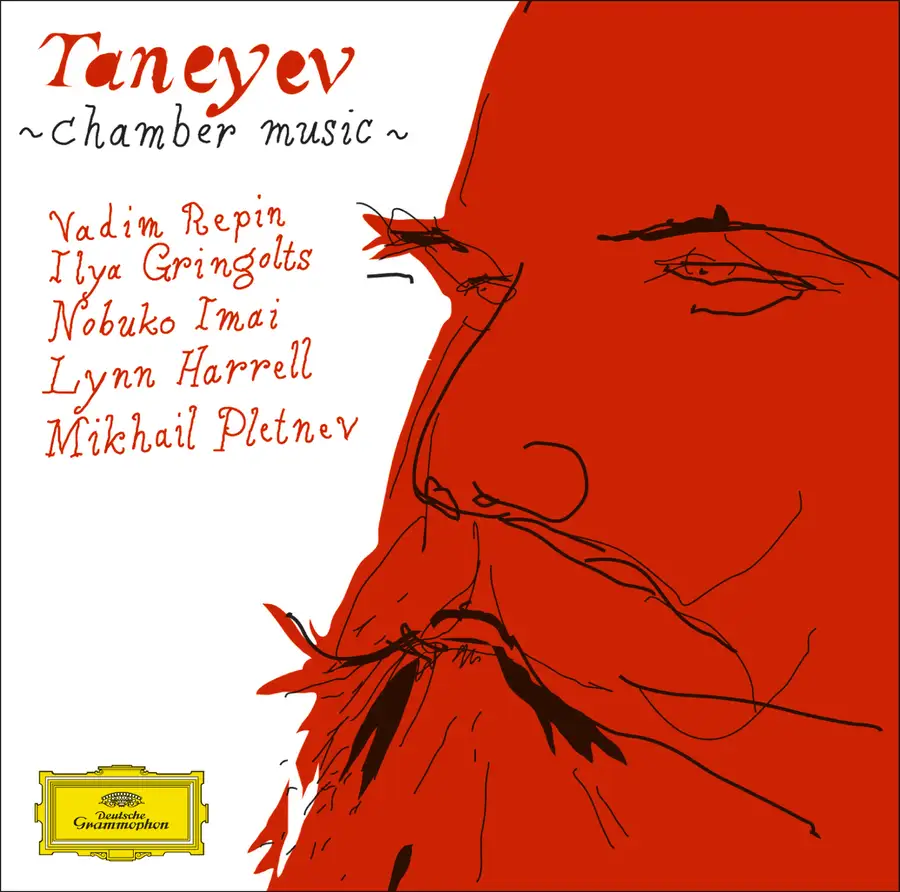
从塔涅耶夫三首钢琴室内乐进入,听五位独奏家的重奏对话。
塔涅耶夫在卸任莫斯科音乐学院院长后,于五十岁前后写下这三首钢琴室内乐,最初是为自己的音乐会演出而作,因此钢琴声部份量厚重。作品写作工整而富有巧思,虽未完全摆脱中庸趣味,却也不乏动人之处,尤其在钢琴四重奏中,仿佛面对一位勤奋而尚未找到自我声音的学生。这张 DG 录音集结五位独奏家,以室内乐编制呈现塔涅耶夫的音乐世界,适合从钢琴与弦乐的对话中感受这位作曲家独特的创作面貌。
Sergey Taneyev composed his three piano chamber works in the years 1902-11, on either side of his 50th birthday, when his days as director of the Moscow Conservatoire were well behind him but when he still commanded nationwide respect for his gifts as pianist, administrator and craftsman-composer. These pieces were in the first instance vehicles for his own concert performances, and the piano parts are accordingly massive. Compositionally the writing is unfailingly well wrought and resourceful: by no means entirely confined to middle-ofthe- road tastefulness, yet rarely, if ever, touched by the kind of distinction evinced by his great pupils, Rachmaninov and Scriabin. At times, especially in the Piano Quartet, it is like being in the presence of a very large and likeable student, who has never quite found his own voice but who remains intent on getting higher and higher marks for the same type of exercise. Yet at the same time the music has an undeniable sweep, and some of the ideas evidently lodged in the minds of future generations – compare the opening bars of the Quintet with Prokofiev's First Violin Sonata, for instance, or the opening of the Piano Trio with the third movement of Shostakovich's First Violin Concerto. There is a certain Elgarian gruffness here and there, and a liking for fulminating, lowlying textures that may be off-putting at first encounter but which exerts its own particular charm on closer acquaintance. The Piano Quintet is the latest and grandest of the three works, its structural layout and textures being indebted in just about equal measure to Tchaikovsky and César Franck. The initially consoling second subject is destined for heroic things in a grandstand résumé at the end of the finale, and on repeated hearings it's a pleasure to discover its unassuming beginnings. In between, the Scherzo has that touch of fairytale magic that came so naturally to most of the great Russians while the slow movement daringly strips down to a passacaglia theme on the cello before dressing up impressively again. Pletnev and his dream-team string colleagues are passionate advocates, as they are for the more classically conceived (or at least more Schumannesque) Trio. The strings are placed rather far forward, and the acoustic is a fraction too dry for comfort. It's a tribute to the Barbican Piano Trio that they hardly ever find themselves outdone in crusading passion, or indeed outplayed technically, by their bigger-name rivals. James Kirkby is as sensitive as Pletnev to the oases of calm in the slow movement of the Trio, where the piano holds the stage in moments of quiet rapture. By contrast, the Piano Quartet launches immediately into its ecstatic stride, risking anticlimax but rescuing itself by constant renewed initiatives. Violist James Boyd makes his presence strongly felt in the dark-hued slow movement. The Dutton recording strays a fraction the other side of the ideal from DG by giving us a little too much of the room acoustic of St George's, Brandon Hill, Bristol; but once again it is perfectly serviceable.
演奏家 Vadim Repin · Ilya Gringolts · Lynn Harrell · Nobuko Imai & Mikhail Pletnev
演奏家 Vadim Repin (violin) , Ilya Gringolts (violin) , Nobuko Imai (viola) , Lynn Harrell (cello) , Mikhail Pletnev (piano) , Ingmar Haas (videoscripteditor)
Presto 未列出分轨。
Presto 未列出分轨。
演奏家 Vadim Repin (violin) , Lynn Harrell (cello) , Mikhail Pletnev (piano) , Ingmar Haas (videoscripteditor)
Presto 未列出分轨。
Presto 未列出分轨。
本页推荐由 Presto 新片信息、iTunes/Apple 链接与曲目、QQ 音乐链接、豆瓣音乐元数据、以及可用官方 Booklet 状态与内容改写自动生成;Presto 数字手册标记不等同于可公开访问的 PDF,普通页面不提供 Booklet PDF 或官方 Booklet 详情页入口。
当前置信度为 85%,只表示资料和推荐依据的完整度, 不是星级,也不是对演奏或录音质量的审美评分。